
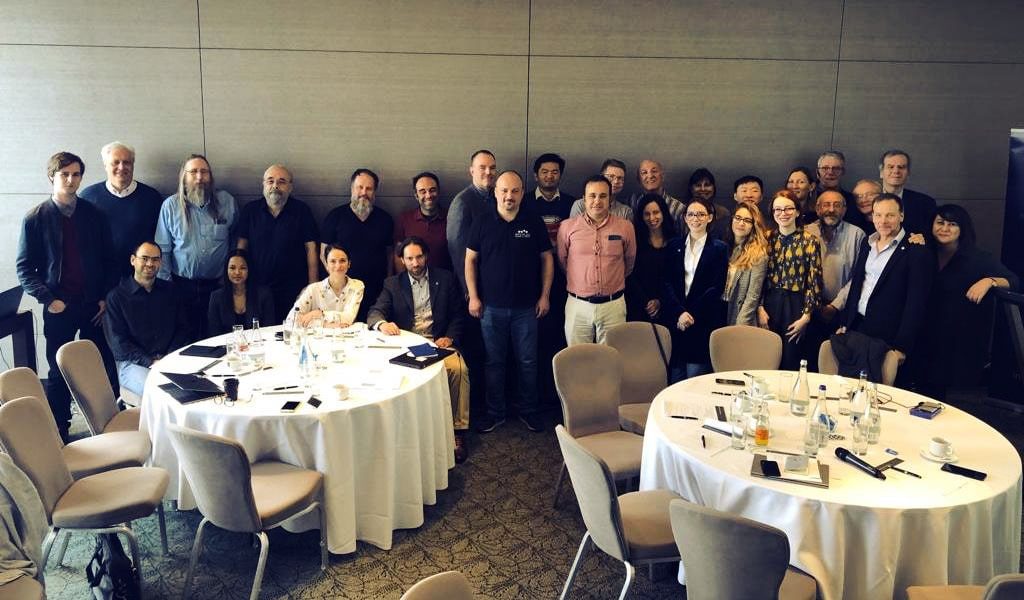
The 2019 European Chapters Meeting took place from 9-10 May in Bucharest, Romania. (Watch the livestream here.)
The two-day event gathered 31 participants consisting of 22 fellows coming from 20 Internet Society Chapters in the European region. The meeting agenda focused on discussions around Consolidation on the Internet Economy, Encryption, Consumer IoT Privacy & Security, and the Internet of Food.
This meeting was part of a series of events the Internet Society is organizing in 2019 across regions. It was particularly important because of the valuable feedback the Chapters provided on the key questions of the 2019 Global Internet Report and the direction of the long-term objectives for Strategy 2025.
- Carl Gahnberg, Policy Advisor at Internet Society gave a presentation on consolidation and the 2019 Global Internet Report (GIR). The importance of connecting with different audiences makes the 2019 GIR relevant not only for the Internet Society community, but also policymakers and the broader public. The report shows that trends in Internet Applications, the Access Provision, and Service Infrastructure and looks at trends of consolidation in the Internet economy. Unlike in past years, the report doesn’t provide recommendations but outcome questions. Participants discussed these outcome questions and the main takeaways were the need for open standards and sustaining the developments of public IXPs as well as raising awareness and educating the masses. But work on consolidation doesn’t stop with the report. What to expect In 2019? More in-depth research through engagement with external researchers and stakeholders.
- Karen Yerznkanyan from the Internet of Things SIG talked about the opportunities and the importance of training young people on developing basic IoT solutions in the areas of hardware design, software development, communication, and security. The IoT community in Armenia has led several successful projects in this direction and can serve as a positive example for other Chapters.
- Encryption couldn’t miss the agenda and Hans Peter Dittler, member of the Internet Society Board of Trustees, covered technical aspects of encryption, applications to real-life scenarios, and threats we’re facing. The need for encryption is based on trust, which takes a long time to build but can be destroyed in seconds. We need trust in the Internet ecosystem to ensure that data can be transferred and thus strong encryption is key for a trustworthy Internet.
- Ceren Unal, Regional Policy Manager for Europe at Internet Society, covered the IoT Trust by Design campaign and advised Chapters on how to work with local stakeholders to develop better IoT policy: identify your local allies, amplify your impact through partnerships, and create an action plan relevant for your community. One way to do this is to use events or policy engagement opportunities to leverage advocacy efforts and create new events. Some countries are already holding multistakeholder working groups but these working groups should be tailored to the needs of a specific community depending on whether that community mainly contains consumers or producers of IoT devices.
- Internet Society exists to build, promote, and defend the global infrastructure that connects independent networks into a single Internet beyond borders and communities. Joyce Dogniez, the Internet Society’s Vice President, Community Engagement and Development, explained that the 2020 Action Plan will focus on these three objectives. Chapters argued that first we need to ask ourselves the type of the Internet we want to promote: go beyond Internet access and build “the Internet we want” and then expand it.
- Johan Jörgensen, Chair of the Internet of Food SIG thinks that the Internet can help solve some of our major food problems through connected data and network infrastructure. Johan explained that by extracting, storing, and processing more data about the food that we produce and consume, we will be able to make smarter decisions on what food we eat. One of the concerns, however, is that the current Internet infrastructure will allow some major Internet players to control our food. The big question is “how do we build an Internet which will help feed the planet in a sustainable way?”
- The work that Chapters do on a local level help advance the Internet Society’s mission and Neville Hobson, Internet Society Director of Digital Marketing, talked about the importance of social media marketing in advancing their work. Aligning all social networks with consistent messaging and connecting with influential voices were two of Internet Society’s goals. When it comes to Chapters, it’s important for them to maintain a strong brand presence by having clear and measurable goals, sharing their blog posts on social media, reaching out for help to others in their network, and learning from analytics.
At the end of the meeting, the Chapters shared their future projects, which ranged from the creation of Youth IGFs, Internet accessibility for vulnerable groups, investigational projects on Internet blocking, task forces on IPv6, online courses on digital rights, community networks, cybersecurity training, and many more exciting activities.
You can learn more about the development of these projects by visiting the European Bureau page. The full meeting report can be found here.
The post European Chapters Meeting: Consolidation, Trust, and More on the Agenda appeared first on Internet Society.