
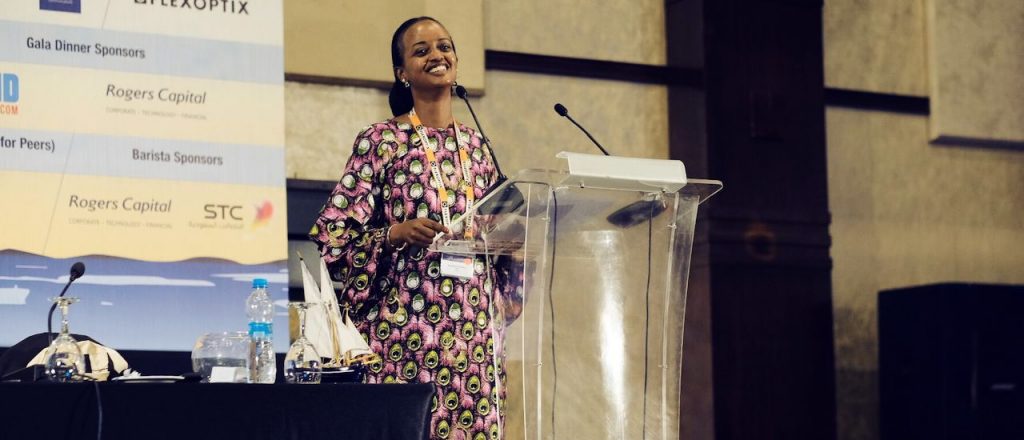
It’s been a record-breaking year: 97 women attended AfPIF 2019, the highest ever, showing the fruits of diversity efforts from organizers and sponsors.
In the last three years, there have been fellowships
targeting women in engineering, supported by organizations like Workonline,
Google, LINX, and Akamai. There’s also been a working lunch, where participants
discuss the best way AfPIF can be more inclusive to women.
As the curtains fell on the tenth edition of
AfPIF, it was clear that the future is looking bright, with 367 men and women
attending, representing 59 countries: 202 from Africa, 36 from Europe, 16 from America, and 13
from Asia.
The first panel of the day was dedicated to
looking back at the challenges in the last ten years, identifying the opportunities
going forward, and what we all must do in order to guarantee business growth
and better connectivity for the region.
One of the key points was that the traditional
telco model is changing, and companies will have to adapt in order to stay
relevant. Seacom, for instance is exploring other business opportunities as the
demand for traditional infrastructure falls and local content grows, leading to
formation of ISPs that can survive largely without the need for IP transit.
“The notion that everyone wants transit
to London doesn’t hold anymore. In South Africa, it is now possible for a local
ISP to survive on 90% of local traffic, meaning they may not need IP transit,
compared to other parts of the continent. That makes sales harder in South
Africa, but growth opportunities are there in countries that are yet to open
up,” said Mark Tinka, Head of IP Engineering at Seacom.
The panel made it very clear that the
ecosystem is made up of complex relationships and will need all parties working
together in order to grow. The growth in content has a direct correlation with
the growth in data center space. While in other parts of the world its easier
to predict the uptake, it is much harder to predict the growth in Africa.
For Teraco, initially, the goal was to have
more space, explain to people the benefits of co-location, and have more
connections. However, virtualization means one can do more with smaller spaces
and the challenge now is continued innovation and scaling, as more companies
explore having 10G ports, which was unheard of 10 years ago.
Ten years ago, Akamai’s challenge was how to
enter more markets, build relationships and navigate complex regulatory issues
in different countries. Now, the CDN is in major service providers in 26
countries and is using the lessons learned to grow its footprint to more
countries.
For Google, the challenge still remains access.
How do we make connectivity more accessible to more people? Smartphones have
become cheaper, but the bandwidth needs to get more affordable for more people
to use it. The cost of last mile equipment needs to get more affordable for
networks to provide more affordable connectivity, whether through the radio
network or fiber.
The issue of wayleaves, whether by national,
local, or aviation authorities remains a major issue for many organizations.
Whether it’s on cost or the time it takes to get the approval, it was clear
that more dialogue is needed in order to make the process smoother.
Network security has become more paramount, as
more people get online, including criminals. The importance of security was
discussed at length, showing how the networks are susceptible to phishing, DDoS
and human error.
It was agreed that the security and growth of
Africa’s tech ecosystem is an individual as well as a communal responsibility.
AfPIF 2020 will be held in Kigali, Rwanda.
The post AfPIF Day Three: A Record Number of Women appeared first on Internet Society.